Source Waterproof Metal Wireless Speaker for DJ, Home, and Outdoor Use
Explore 30 listings for the waterproof metal wireless speaker, featuring Bluetooth 5.0 connectivity and IPX6 durability. Compare active amplification options, RGB lighting, and remote control features across various power outputs and battery capacities to find the ideal unit for stage, home, or portable applications.
Key considerations
Products List




Comprehensive Sourcing Guide
Waterproof Metal Wireless Speaker Sourcing Guide
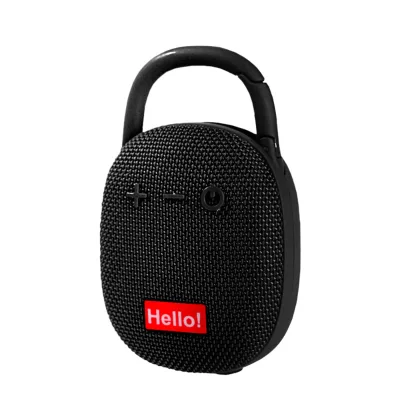
Procuring waterproof metal wireless speakers requires distinguishing between durable outdoor units and general portable audio devices. The market data indicates a clear split where some listings specify metal shells with IPX6 water resistance ratings, while others rely on plastic housings for similar wireless functions. Buyers must carefully verify the shell material specification before committing to an order, as the term "metal" often appears alongside plastic variants in broad category listings.
Verification of the specific product model is essential to confirm the presence of a metal chassis and the claimed water resistance level. While some observed units feature a 5W power output and Bluetooth 5.0 connectivity, others in the same category may only offer 3W power with different communication standards. Ensuring the selected unit matches the exact technical requirements for the intended environment prevents costly mismatches between the purchased hardware and the operational demands of the deployment site.
Product Scope and Observed Listing Signals
The observed product range includes diverse configurations ranging from mini portable speakers to larger stage and DJ units. Listings show variations in battery capacity, with some units offering 700mAh capacity while others support longer lasting times of 4 to 8 hours. This variance suggests that buyers should not assume a standard battery life across all metal wireless options but must check the specific capacity and power consumption of the target model.
Signal analysis reveals that features like RGB lighting and remote control capabilities are common but not universal across the metal speaker segment. Some units are designed with digital displays and handle trolleys for mobility, whereas others focus on compact portability without these additions. Understanding these distinct feature sets allows procurement teams to filter listings effectively, ensuring the selected speaker aligns with the specific aesthetic and functional needs of the project.
Technical Specifications to Verify
Buyers must rigorously verify the Signal-to-Noise Ratio (SNR) and sound channel configuration to ensure audio clarity meets professional standards. The data shows SNR values ranging from 70-80dB up to 91-100dB, with some units offering single-channel output while others support 5.1 surround sound. Selecting a unit with an SNR above 90dB is critical for high-fidelity applications, whereas lower ratios may suffice for background music in less demanding environments.
Power output and communication protocols are equally critical technical parameters that define the speaker's performance envelope. While some models operate at 3W, others deliver 5W of power, and connectivity ranges from standard Bluetooth to specific versions like Bluetooth 5.0. Additionally, the interface type, such as PCI or USB disk support, must be confirmed to ensure compatibility with existing audio sources and control systems within the buyer's infrastructure.
Compliance and Safety Documentation
Safety compliance is a non-negotiable aspect of sourcing electronic audio equipment, particularly for units intended for public or commercial use. The available data confirms that certain models carry CE, RoHS, and CCC certifications, which are essential for market access in Europe, environmental compliance, and China respectively. Buyers should request valid certification documents for every batch to verify that the specific units being purchased have undergone the necessary safety testing and regulatory approval processes.
Beyond standard certifications, the physical construction of the speaker must align with safety standards for outdoor or high-traffic environments. The IPX6 waterproof rating observed in some listings indicates a high level of protection against powerful water jets, which is vital for outdoor durability. However, this rating must be explicitly confirmed for the specific metal model, as plastic variants may have different or lower water resistance levels that could lead to premature failure in wet conditions.
Cost Drivers and Commercial Terms
Pricing in this category is heavily influenced by the material composition, specifically the use of metal versus plastic, and the complexity of the electronic components. The observed price range spans from approximately $1.92 to $3199, reflecting the vast difference between basic mini speakers and high-end professional systems. Buyers should anticipate that metal construction, higher power outputs, and advanced features like RGB lighting will command a premium over standard plastic alternatives.
Minimum Order Quantities (MOQ) and packaging standards also significantly impact the total cost of ownership and logistics planning. MOQs vary widely from 1 unit to 3000 units, requiring buyers to align their order volume with supplier flexibility and budget constraints. Furthermore, packaging details such as color boxes or standard export cartons affect shipping costs and damage rates, making it essential to negotiate packaging specifications that balance protection with cost efficiency.
Supplier Qualification and Quality Control
Supplier qualification should focus on their ability to provide private mold services and consistent manufacturing quality for metal components. The data indicates that private mold availability is a key differentiator, allowing for custom branding and specific design requirements that generic suppliers cannot fulfill. Buyers should prioritize suppliers who demonstrate experience with metal fabrication and waterproofing techniques to ensure the final product meets the rigorous durability standards required for outdoor applications.
Quality control protocols must include verification of the battery capacity, shell integrity, and waterproof sealing before shipment. Since battery lasting times and capacities vary, suppliers should provide test reports confirming that the actual performance matches the stated specifications. Implementing a pre-shipment inspection that checks for physical defects in the metal shell and verifies the functionality of all special features, such as touch controls and remote operation, is essential to mitigate the risk of receiving substandard goods.
Long-Term Procurement Checks
Establishing a long-term relationship with a supplier requires regular audits of their production consistency and supply chain stability. Buyers should monitor the supplier's ability to maintain the specific metal shell quality and waterproof ratings over multiple production runs, as material sourcing fluctuations can impact product durability. Regular communication regarding any changes in component suppliers or manufacturing processes helps ensure that the product specifications remain consistent with the original approval samples.
Future procurement strategies should also account for the evolving technology landscape, particularly regarding Bluetooth standards and battery efficiency. As wireless technology advances, suppliers must be capable of integrating newer protocols like Bluetooth 5.0 or higher without compromising the waterproof integrity of the metal housing. Proactively discussing roadmap compatibility ensures that the inventory remains relevant and functional for years, protecting the investment against rapid technological obsolescence.
FAQs
Can I find waterproof metal wireless speakers with Bluetooth 5.0?
Yes, waterproof metal wireless speakers with Bluetooth 5.0 are available for sourcing. These units often feature an IPX6 waterproof rating and include RGB LED lighting. They typically support phone functions and offer active amplification for clear sound output during outdoor use.
What is the typical battery capacity for these speakers?
The typical battery capacity for these speakers is 700mAh. This capacity supports a lasting time of approximately four to eight hours depending on usage volume. The chargeable design ensures portability for mobile phones and portable players without needing constant external power.
Which certifications do these speakers usually hold?
These speakers usually hold CE, RoHS, and CCC certifications. Such standards ensure compliance with safety and environmental regulations for international markets. Buyers can verify these certifications when sourcing from manufacturers in China to guarantee product quality and regulatory adherence.
How much does a single unit cost to source?
A single unit costs between 1.92 and 3199 USD depending on specifications. Pricing varies based on power output, material, and customization options. Buyers should check specific supplier listings to determine the exact price for their required volume and feature set.
Can I request custom packaging for these speakers?
Yes, you can request custom packaging for these speakers as customization is available. Products often come in color boxes or standard export cartons. This flexibility allows buyers to tailor branding and shipping requirements to meet specific distribution needs or retail standards.
What is the minimum order quantity for these speakers?
The minimum order quantity ranges from one to three thousand units. This wide range accommodates both small trial orders and large bulk purchases. Buyers should confirm the specific MOQ with the supplier to ensure it aligns with their inventory planning and budget constraints.
Which sound channel configurations are available for these speakers?
Available sound channel configurations include single channel and 5.1 channel setups. Single channel models are common for mini portable speakers, while 5.1 systems suit home theatre applications. Buyers can select the configuration that best fits their intended usage scenario and audio requirements.